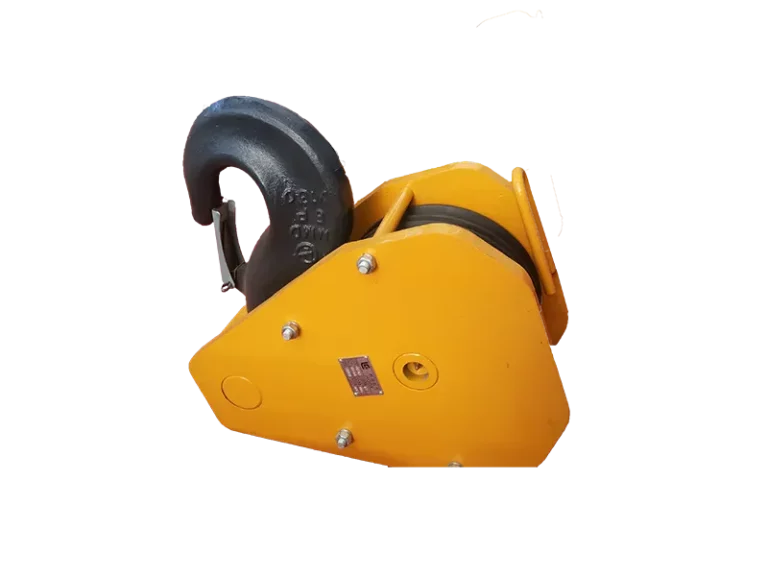
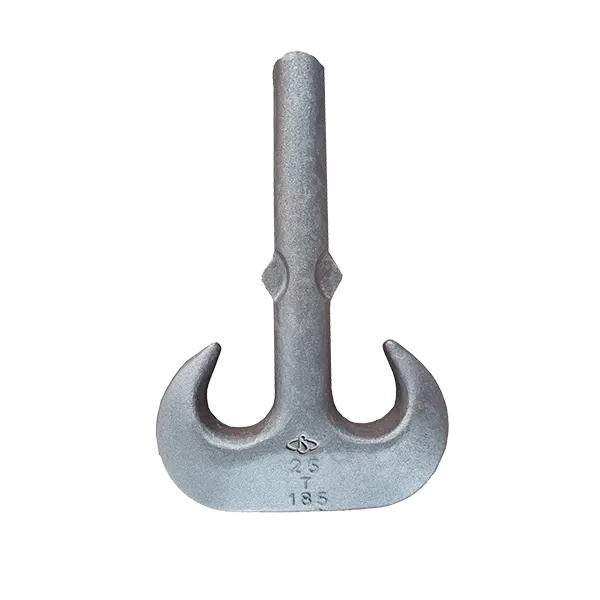
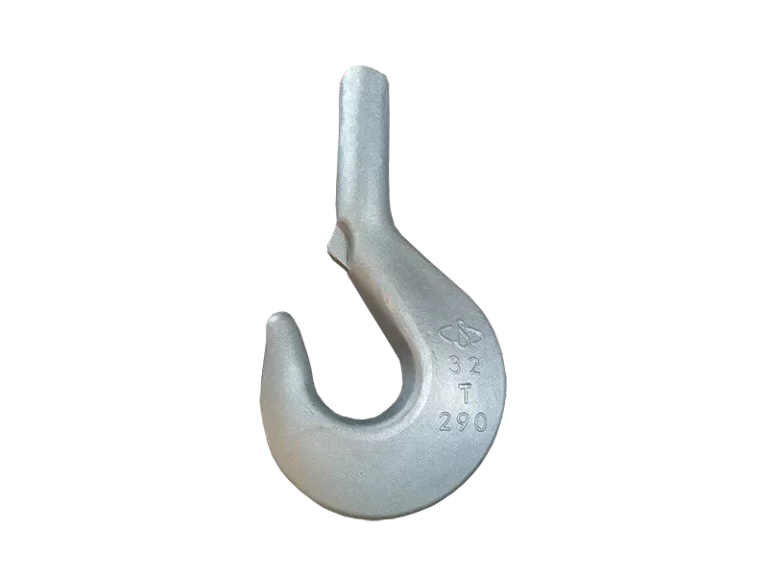
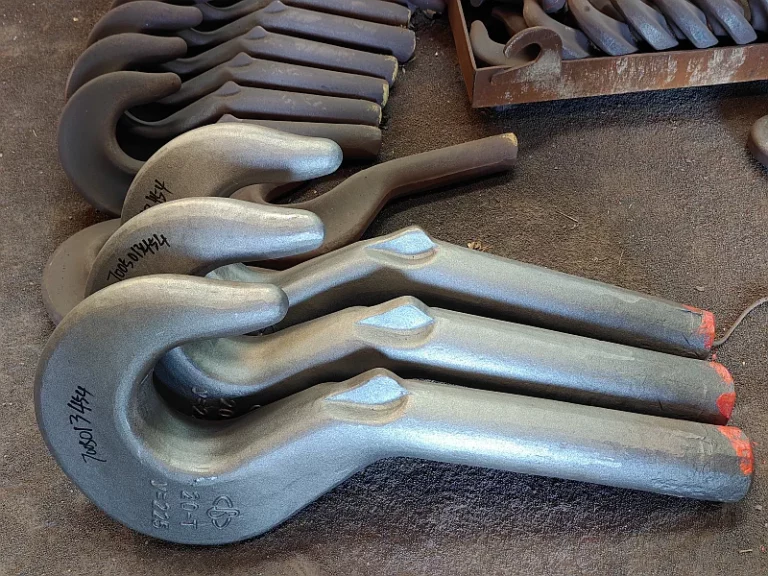
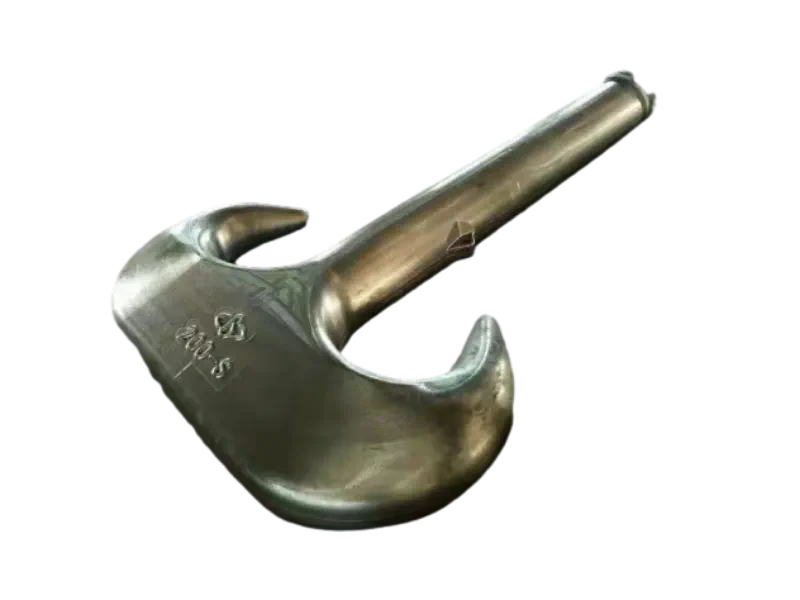
Forged lifting hooks are among the most safety-critical components in any crane or hoisting system. The material chosen for a hook directly determines its lifting capacity, toughness, fatigue resistance and service life. For the same hook geometry, different material grades can result in very different working load limits. This article explains how forged lifting hooks are classified by strength grade, what steel is used for each grade, and which international standards apply.
Why Material Grade Matters
In crane hook design, dimensions alone do not determine lifting capacity. The material class has a major influence on:
- Allowable load capacity
- Tensile and yield strength
- Toughness and impact resistance
- Fatigue resistance under cyclic loading
- Overall safety performance
A higher material grade normally allows a higher working load for the same hook size, but it also demands stricter material control, forging, heat treatment and inspection.
Strength Grades of Forged Lifting Hooks: M, P, S, T and V
Based on DIN 15400, FEM 9.671 and the Chinese standard GB/T 10051, forged crane hooks are classified into five strength grades, from lowest to highest: M, P, S, T and V. The table below shows typical materials and applications for each grade.
| Strength Grade | Typical Material (DIN) | Chinese Equivalent | Typical Application |
|---|---|---|---|
| M | StE-285 / StE-355 | Q345qD | Light-duty and general lifting |
| P | StE-355 / StE-420 | Q345qD / Q420qD | Normal lifting applications |
| S | StE-420 / StE-500, 34CrMo4 | Q420qD / 35CrMo | Medium-duty, higher loads |
| T | 34CrMo4 / 34CrNiMo6 | 35CrMo / 34Cr2Ni2Mo | Medium- and heavy-duty cranes |
| V | 34CrNiMo6 / 30CrNiMo8 | 34Cr2Ni2Mo / 30Cr2Ni2Mo | Heavy-duty and critical lifting |
Note: 34Cr2Ni2Mo is the Chinese equivalent of 34CrNiMo6. Alloy steel grades are supplied in the quenched and tempered condition.
Mechanical Properties by Strength Grade
Each strength grade defines minimum mechanical values. Structural steel grades (M, P and partly S) are usually normalized, while higher grades T and V are quenched and tempered. Typical values are shown below.
| Strength Grade | Structural Steel Re/Rp0.2 (MPa) | Quenched and Tempered Steel ReH/Rp0.2 (MPa) | Impact Energy Akv (ISO-V) at -20 °C (J) |
|---|---|---|---|
| M | 235 | — | 39 |
| P | 315 | — | 39 |
| S | 390 | 390 | 27 |
| T | — | 490 | 27 |
| V | — | 620 | 27 |
Corresponding International Standards
Depending on the target market and application, forged lifting hooks are manufactured and certified to different international standards. The strength grades M, P, S, T and V are shared across the DIN, FEM and GB/T systems.
- DIN 15400 — Lifting hooks for lifting appliances: materials, mechanical properties, lifting capacity and stresses. It defines the material classes used for crane hooks.
- DIN 15401 — Forged single hooks. Part 1 covers unmachined hook blanks; Part 2 covers finished parts with threaded shank.
- DIN 15402 — Forged double (ramshorn) hooks.
- EN 1677 — Components for slings, safety. Grade 8 forged steel components are made of quenched and tempered alloy steel, with minimum breaking force equal to 4 × WLL and operating temperature range from -40 °C to +200 °C.
- GB/T 10051 — Chinese standard for lifting hooks. Part 1 specifies mechanical properties, capacity, stress and materials; Part 3 covers forged lifting hooks. Strength grades: M, P, S, T, V.
- ASME B30.10 — American standard for hooks, requiring high-quality fine-grain alloy steel (typically comparable to 34CrMo4), forging, heat treatment and proof load testing.
- ISO 7597 — Forged steel lifting hooks with shank.
- FEM 9.671 / ISO 4301 / GB/T 3811 — Crane and mechanism duty classification, used together with hook strength grades to determine suitable working loads.
Heat Treatment: Unlocking the Strength Grade
Material grade and heat treatment must be considered together. A high-grade alloy steel delivers its full performance only after proper heat treatment. Higher grades such as T and V are quenched and tempered to achieve an optimal balance of strength and toughness, improving fatigue resistance and reducing the risk of cracking. Without correct heat treatment, even a premium material cannot meet the required mechanical properties.
How to Select the Right Strength Grade
- According to lifting capacity — general applications may be served by class P; higher loads require class T or V.
- According to working duty — light occasional use differs from high-frequency operation in steel plants, ports and heavy manufacturing, where class T or V is usually more suitable.
- According to impact load — applications with sudden starts, braking or dynamic loads require better toughness, not only strength.
- According to working environment — ports, marine projects, low-temperature workshops and outdoor equipment often require class T or V for higher reliability.
- According to customer drawing and standard requirements — the material class should always be confirmed against the drawing and the applicable standard before production.
Inspection and Quality Control
Typical inspections for forged lifting hooks include chemical composition verification, mechanical property testing, hardness testing, dimensional inspection, magnetic particle inspection for surface cracks, ultrasonic testing when required, and proof load testing. These checks confirm that the hook meets the required safety and quality standards before delivery.
Common Mistakes in Material Selection
- Selecting material only based on price.
- Using class P material for heavy-duty applications.
- Ignoring working duty and load frequency.
- Replacing a specified DIN material without technical confirmation.
- Focusing only on strength and ignoring toughness.
- Ignoring heat treatment and inspection requirements.
Safety reminder: Hooks of strength grades T and V are not recommended for metallurgical cranes. The final material selection must always be confirmed according to the customer drawing, the applicable standard and the actual working conditions.
Conclusion
Selecting the right material for forged lifting hooks is a decision that balances safety, working conditions and cost. Class P suits general lifting; class T provides higher strength and toughness for demanding conditions; class V is reserved for heavy-duty and critical lifting applications. Whichever grade is chosen, it must be realized through controlled forging, proper heat treatment and full inspection to deliver a hook you can trust.