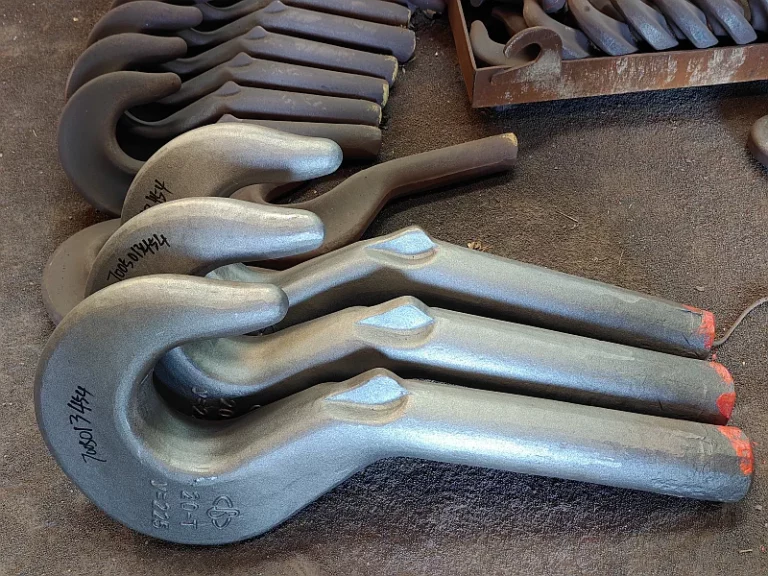
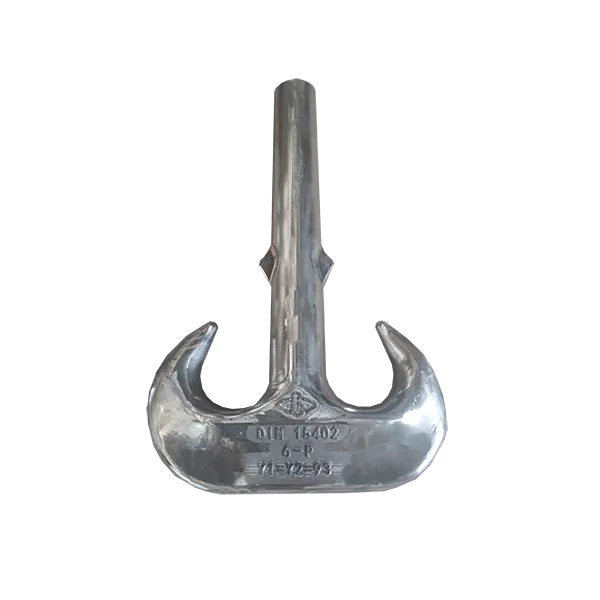
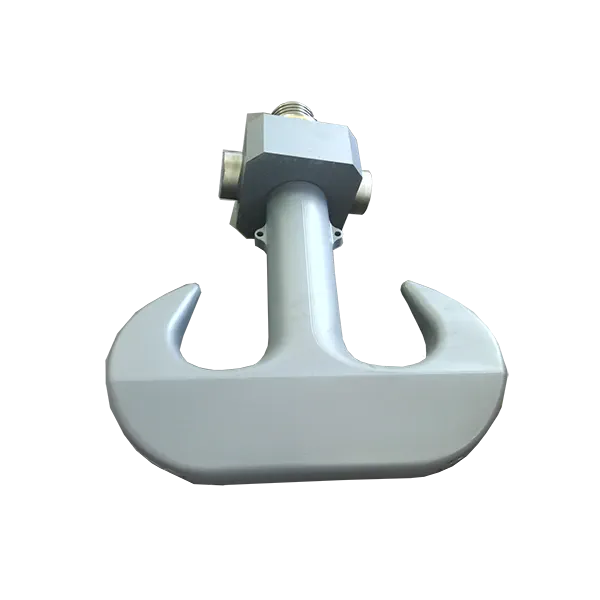
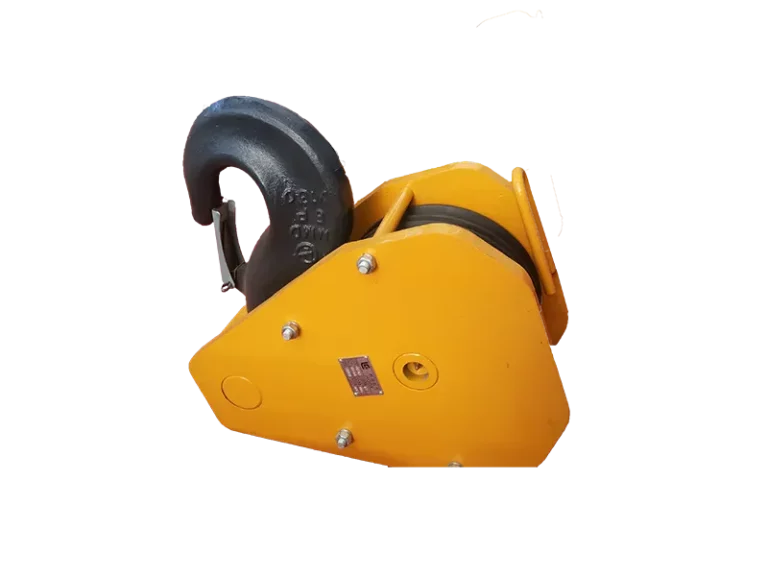
When it comes to heavy-duty lifting, the hook is one of the most safety-critical components on any crane. In Europe and much of Asia, the go-to reference for forged double hooks — better known as ramshorn hooks — is the German standard DIN 15402. This post focuses on DIN 15402 Part 1, which covers ramshorn hooks for lifting appliances in the unmachined (blank) state. If you design, specify, source, or inspect crane hooks, this summary will give you the essentials in one place.
1. What Is DIN 15402?
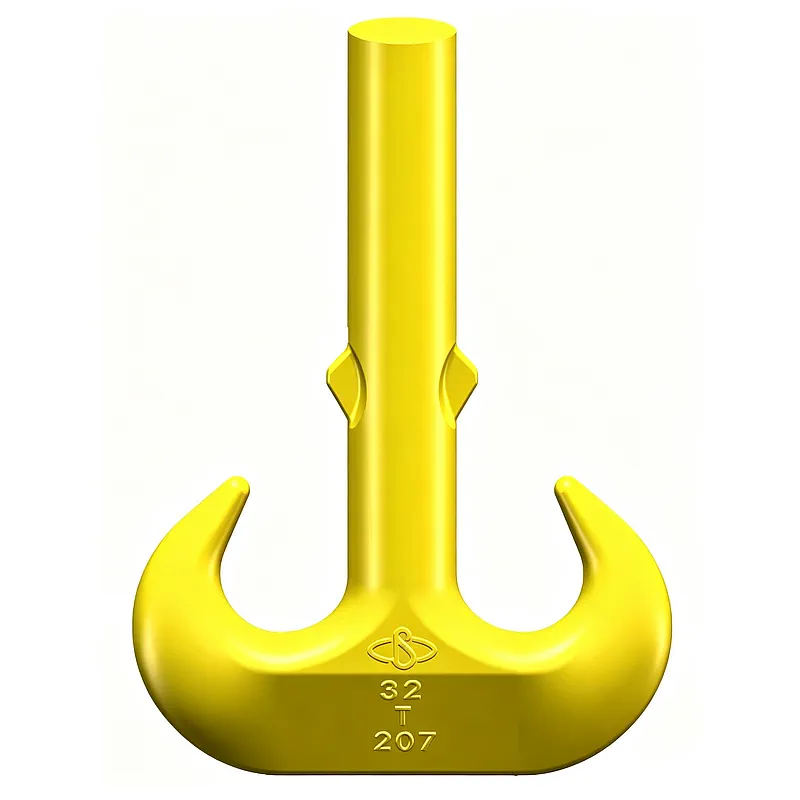
DIN 15402 is a standard published by the Deutsches Institut für Normung (DIN) — the German Institute for Standardization — dedicated to forged double hooks for lifting appliances. Double hooks are also called duplex hooks or ramshorn hooks because of their characteristic twin-pointed, “ram’s horns” shape.
The standard sits within a broader family of lifting-hook standards and works alongside:
- DIN 15400 — overarching definitions, strength classes, and general requirements for lifting hooks
- DIN 15401 — forged single hooks for lifting appliances
- DIN 15402 — forged double/ramshorn hooks (this standard)
Together, DIN 15401 and DIN 15402 form a complete specification system covering both single-point and double-point crane hooks.
What Part 1 Specifically Covers
DIN 15402 Part 1 (officially “Lifting hooks for lifting appliances; Ramshorn hooks; Unmaschined parts”) defines the dimensions, tolerances, hook numbering, and blank (as-forged) geometry of ramshorn hooks. The “unmachined parts” wording means it specifies the hooks in their forged blank condition — before final machining operations such as threading the shank.
Quick reference: DIN 15402-1 : 1982-11 — “Lifting hooks for lifting appliances; Ramshorn hooks; Unmaschined parts”
2. What Is a Ramshorn Hook?
A ramshorn hook is a forged hook with two symmetrical load-bearing points, shaped like a pair of ram’s horns. This design has a clear advantage over a single hook:
- Better load distribution — the load is shared across two points instead of one
- Higher stability — less tendency to tilt or twist under load
- Greater capacity — ideal for large-tonnage lifting where a single hook would be impractical
These properties make ramshorn hooks the default choice for bridge cranes, gantry cranes, and other heavy-duty lifting equipment.
3. Hook Numbering System
DIN 15402 identifies hooks by a hook number (often written as “No.”), which corresponds to the hook’s size and working load class. The numbering runs from No. 05 up to No. 250 — covering everything from compact hooks used on smaller hoists to ultra-heavy forged units weighing several tonnes.
Typical hook numbers in the series include:
05 · 08 · 1 · 1.6 · 2.5 · 4 · 5 · 6 · 8 · 10 · 12 · 16 · 20 · 25 · 32 · 40 · 50 · 63 · 80 · 100 · 125 · 160 · 200 · 250
In practice, the hook number roughly tracks the lifting capacity in tonnes (for example, No. 25 corresponds to a ~25 t class, No. 250 to a ~250 t class).
4. Key Dimensions
The standard defines a full set of geometry parameters, including:
| Symbol | Meaning |
|---|---|
| a1 / a2 / a3 | Hook opening widths (throat dimensions) |
| b1 / b2 | Spacing between the two hook points |
| d1 | Shank diameter |
| h / h1 | Overall height |
| l1 | Overall length |
| e | Offset / eccentricity dimensions |
| f1 / f2 / f3 | Transition and fillet dimensions |
| r1 … r5 | Internal and external radii |
Example dimensions (forged blank)
| Hook No. | Type | a1 (mm) | a2 (mm) | a3 (mm) | b1 (mm) | d1 (mm) | Weight (kg) |
|---|---|---|---|---|---|---|---|
| 2.5 | RSN | 50 | 40 | 65 | 40 | 42 | 6.9 |
| 10 | RSN | 90 | 71 | 116 | 75 | 75 | 36.3 |
| 25 | RFN | 140 | 112 | 182 | 118 | 118 | 138 |
| 50 | RFN | 200 | 160 | 260 | 170 | 170 | 394 |
| 100 | RFN | 280 | 224 | 364 | 236 | 236 | 1,060 |
| 160 | RFN | 355 | 280 | 458 | 300 | 300 | 2,115 |
| 250 | RFN | 450 | 355 | 580 | 375 | 375 | 4,268 |
Note: “RSN” and “RFN” are common type designations used in the trade for small and large ramshorn hooks respectively. Always refer to the official standard for complete, authoritative dimension tables.
Permissible deviations (tolerances)
The standard specifies forging tolerances as an upper/lower deviation (e.g., +3/0 means +3 mm to 0 mm). A selection:
| Hook No. range | a1 | a2 | a3 | b1 | d1 |
|---|---|---|---|---|---|
| 1.6 – 2.5 | +3/0 | +1/0 | — | — | — |
| 4 | +4/0 | +2/0 | — | — | — |
| 6 – 8 | +5/0 | +2/0 | — | — | — |
| 10 – 16 | +6/0 | +4/0 | — | — | — |
| 20 – 32 | +12/0 | ±10 | +16/0 | +12/0 | +20/0 |
| 40 – 63 | +16/0 | ±12 | +20/0 | +16/0 | +24/0 |
| 80 – 125 | +20/0 | ±16 | +25/0 | +20/0 | +32/0 |
| 160 – 250 | +25/0 | ±20 | +32/0 | +25/0 | +40/0 |
The tolerance structure is deliberate: the opening width a1 is always forged oversize only (+X/0) to guarantee sufficient material remains for final machining, while a2 is allowed a symmetric (±) deviation.
5. Material and Strength Classes
DIN 15402 does not stand alone on materials — it ties into the strength classes defined in the DIN 15400 system. Hooks are classified into strength classes:
| Class | Typical application |
|---|---|
| M | Light-duty / general lifting |
| P | Medium-duty, routine operations |
| S | Medium-to-high duty |
| T | High-duty, frequent operation |
| V | Extra-high duty, extreme or frequent heavy service |
Higher classes demand better mechanical properties and higher safety factors. The actual steel grade depends on the hook number and class. Typical material references include:
- StE-285, StE-355, StE-420 (DIN 17102 / DIN 17103 structural steels)
- 34CrMo4 (DIN 17200 quenched & tempered alloy steel)
- 34CrNiMo6 / 30CrNiMo8 (high-strength Ni–Cr–Mo alloy steels) for the heaviest hooks
Roughly speaking, smaller hooks (e.g., No. 1.6) can be produced in grades from StE-285 up to 34CrNiMo6 depending on class, while the largest hooks (e.g., No. 50 and above) use high-strength alloy steels such as 30CrNiMo8 for class V.
Surface condition in the unmachined state: forged and descaled, with local indentations permitted at the shank and curved back regions — another detail that Part 1 explicitly addresses.
6. Why DIN 15402 Part 1 Matters
For engineers, buyers, and inspectors, DIN 15402 Part 1 is valuable because it provides:
- Standardized interchangeability — hooks from different manufacturers are dimensionally compatible
- Clear tolerances — you know exactly how much machining allowance remains on the forged blank
- A common language — the hook-number system lets you reference any size unambiguously
- A solid foundation for safety — paired with DIN 15400/15401, it forms a coherent, internationally recognized basis for heavy-lifting safety
Whether you are sourcing a No. 25 hook for a gantry crane or specifying a No. 250 forging for a port crane, understanding Part 1 helps you specify and verify the right component.
7. Summary
- DIN 15402 Part 1 defines forged double (ramshorn) hooks for lifting appliances in the unmachined state.
- It specifies dimensions, forging tolerances, hook numbering (No. 05–250), and blank geometry.
- It works together with DIN 15400 (strength classes) and DIN 15401 (single hooks) to form a complete hook-standard system.
- Ramshorn hooks offer superior load distribution and stability, making them the standard for heavy-duty crane lifting.
- Material selection is driven by the strength class (M–V) and hook size.
If you need the authoritative numbers, always work from the official DIN 15402-1:1982 document — the figures above are intended as a practical summary, not a substitute for the full standard.
Disclaimer: This article is an educational summary based on publicly available information about DIN 15402. For design, procurement, or certification purposes, always consult the official standard text and applicable national regulations.