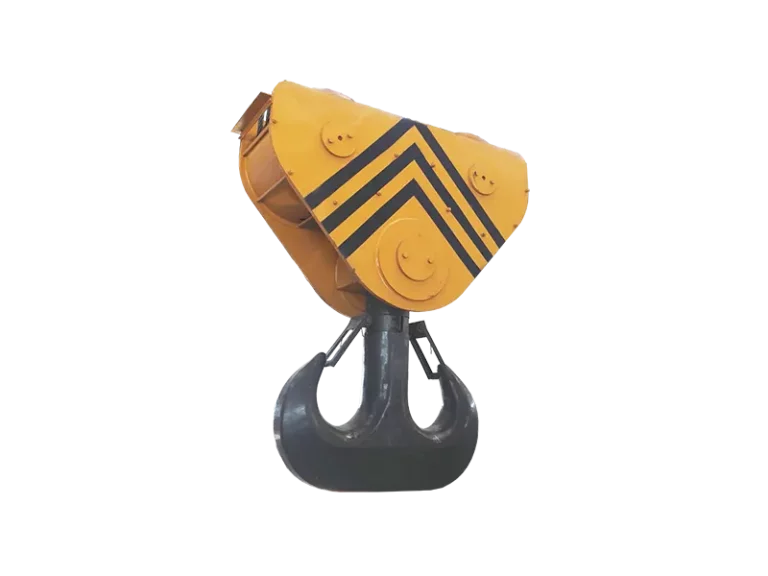
Choosing the right forged lifting hook is not just about picking the biggest one that fits. A hook that is too small risks catastrophic failure under load; one that is unnecessarily large adds weight and cost. The DIN standard family (DIN 15400, DIN 15401, DIN 15402) provides a precise, data-driven method to match hook size to your actual lifting requirements. This guide walks you through the process step by step.
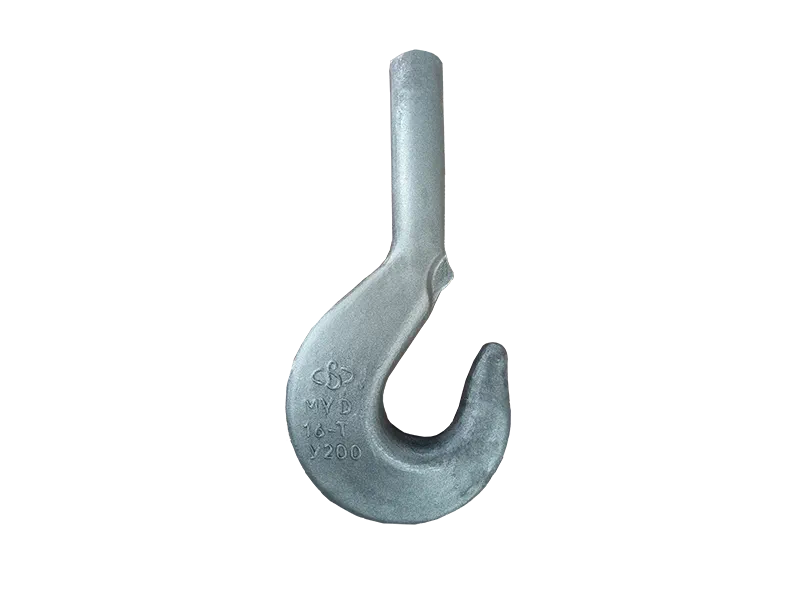
Key DIN Concepts You Need to Know
Before selecting a hook, understand the four parameters that determine its safe working load limit (WLL).
1. Hook Number
DIN 15401 designates hooks by a hook number (e.g. No. 5, No. 10, No. 20), which corresponds to the shank diameter d1 and the overall geometric size. Hook numbers range from 006 (very small) up to 250 (very large).
2. Strength Grade
Per DIN 15400, hooks are classified into five strength grades from lowest to highest: M, P, S, T and V. A higher strength grade allows a higher working load for the same hook size, because the material can withstand greater stress. Grades M and P use fine-grained structural steels; grades S, T and V use quenched and tempered alloy steels such as 34CrMo4 and 34CrNiMo6.
3. Mechanism Duty Class
The crane lifting mechanism is classified into duty classes M1 through M8 (per FEM 9.511 / ISO 4301), based on load spectrum and frequency of use. A hook used in a light-duty workshop (M3) can carry more than the same hook used in a heavy-duty steel mill (M8), because fatigue life is consumed faster under frequent cycling.
4. Safety Factor
DIN hooks are designed with a minimum safety factor of 4:1, meaning the minimum breaking load is at least four times the rated working load limit. Every finished hook must also pass a proof load test at twice the WLL without permanent deformation.
Step-by-Step Selection Process
- Determine the maximum load to be lifted. This is the heaviest load the hook will ever carry, including the weight of slings and accessories. Never use the average load; always use the maximum.
- Determine the crane mechanism duty class. Identify whether the lifting mechanism is light duty (M3-M4), medium duty (M5-M6) or heavy duty (M7-M8). This is usually stated in the crane specification or can be calculated from operating hours and load spectrum.
- Select the strength grade. For general and medium-duty applications, grade P or S is most common. For heavy-duty, high-frequency or critical lifting, choose grade T or V. Note that grades T and V are not recommended for metallurgical cranes.
- Look up the hook number in the DIN 15400 capacity table. Find the row for your hook number and the column for your strength grade and duty class. The intersection gives the allowable WLL. Choose the smallest hook number whose WLL is greater than or equal to your maximum load.
- Verify the shank diameter and mounting dimensions. Check that the hook shank diameter d1, thread size and bearing surface match your hook block, nut and crosshead (per DIN 15411, DIN 15412, DIN 15413).
- Confirm marking and certification. The finished hook must be permanently marked with hook number, strength grade, WLL and manufacturer identification. Request the material test certificate and proof load test report.
Quick Reference Table: WLL by Hook Number and Strength Grade
The table below shows the allowable working load limit (in tons) for common single hook sizes at medium duty class M5, which is the most common scenario for general industrial cranes. For other duty classes, the WLL shifts: lighter duty (M3-M4) allows higher WLL; heavier duty (M6-M8) requires lower WLL for the same hook.
| Hook No. | Shank d1 (mm) | Grade P WLL (t) | Grade S WLL (t) | Grade T WLL (t) |
|---|---|---|---|---|
| 1.6 | 36 | 2 | 3.2 | 4 |
| 2.5 | 42 | 3.2 | 5 | 6.3 |
| 4 | 48 | 5 | 8 | 10 |
| 5 | 53 | 6.3 | 10 | 12.5 |
| 6 | 60 | 8 | 12.5 | 16 |
| 8 | 67 | 10 | 16 | 20 |
| 10 | 75 | 12.5 | 20 | 25 |
| 12 | 85 | 16 | 25 | 32 |
| 16 | 95 | 20 | 32 | 40 |
| 20 | 106 | 25 | 40 | 50 |
| 25 | 118 | 32 | 50 | 63 |
| 32 | 132 | 40 | 63 | 80 |
| 40 | 150 | 50 | 80 | 100 |
| 50 | 170 | 63 | 100 | 125 |
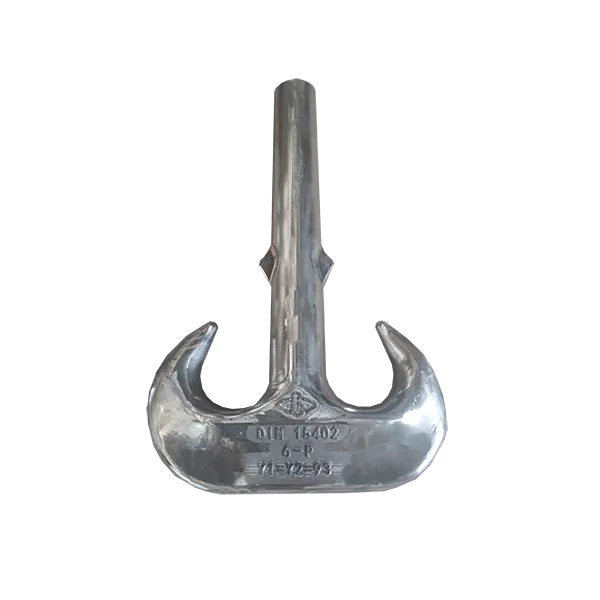
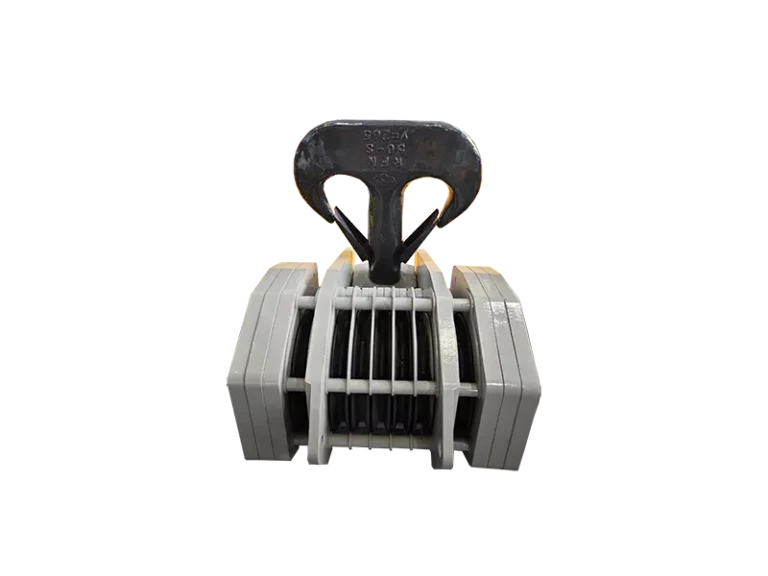
Note: Values are for single hooks at mechanism duty class M5. For double (ramshorn) hooks per DIN 15402, the capacity is typically shared between two sling points. Always consult the full DIN 15400 table for exact values at your specific duty class and strength grade.
Worked Example
Suppose you need a hook for an overhead crane that lifts a maximum of 15 tons. The crane lifting mechanism is classified as M5 (medium duty). Grade S is selected for good strength and economy.
- Maximum load = 15 tons. Duty class = M5. Strength grade = S.
- From the table, find the smallest Grade S hook with WLL at or above 15 tons.
- Hook No. 10, Grade S gives 20 tons WLL (above 15 t). Hook No. 8, Grade S gives 16 tons (also above 15 t but with less margin).
- Select Hook No. 10 (shank d1 = 75 mm) for a comfortable safety margin, or Hook No. 8 if weight and cost are critical and the 16 t WLL is confirmed against the full DIN table.
- Verify the hook block accepts a 75 mm shank, and confirm the hook is marked with No. 10, Grade S and WLL.
Common Mistakes to Avoid
- Selecting by hook number alone. Two hooks with the same number can have very different WLL depending on strength grade and duty class.
- Ignoring the duty class. A hook rated for 20 tons at M3 may only be safe for 10 tons at M8.
- Using average load instead of maximum load. Always size for the heaviest load the hook will ever encounter.
- Upgrading strength grade without rechecking dimensions. A higher grade does not change the shank diameter; verify mounting compatibility separately.
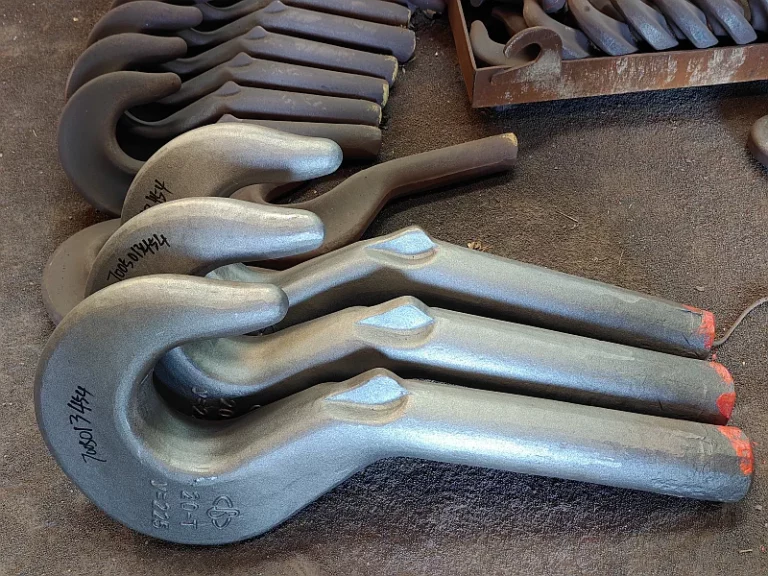
- Using unmachined blanks directly for lifting. DIN 15401 Part 1 blanks must be machined, tested and marked per Part 2 before service.
- Modifying the hook by welding or grinding. Any alteration to the throat, shank thread or bearing surface invalidates the hook’s safety certification.
Safety reminder: The quick reference table in this article is for preliminary selection at duty class M5 only. Always verify the final selection against the complete DIN 15400 capacity table for your exact strength grade and mechanism duty class, and confirm with the hook manufacturer or a qualified engineer before putting the hook into service.
Conclusion
Selecting the right forged lifting hook by load capacity is a structured process: determine your maximum load, identify the duty class, choose the strength grade, look up the hook number in the DIN 15400 table, verify mounting dimensions, and confirm marking and certification. Following this method ensures that every hook you install is properly sized, safe and compliant with DIN standards. When in doubt, always consult the full standard tables and work with a reputable hook manufacturer who can provide material certificates and proof load test reports.