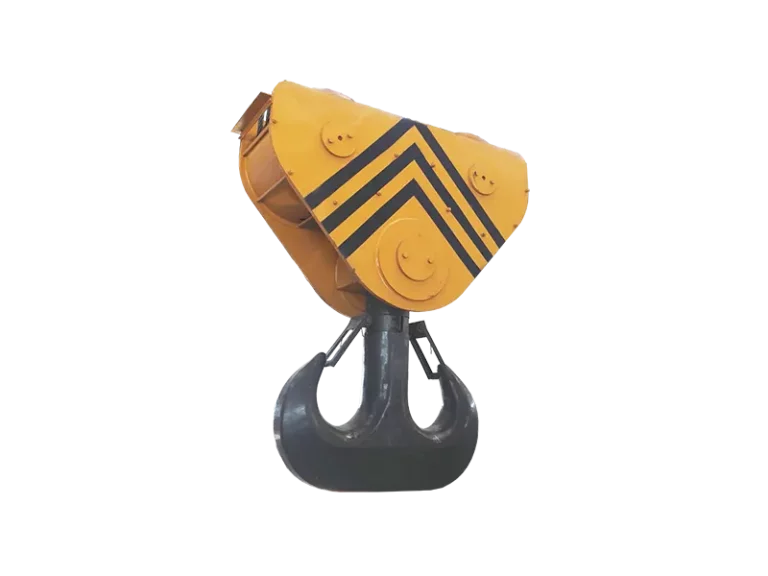
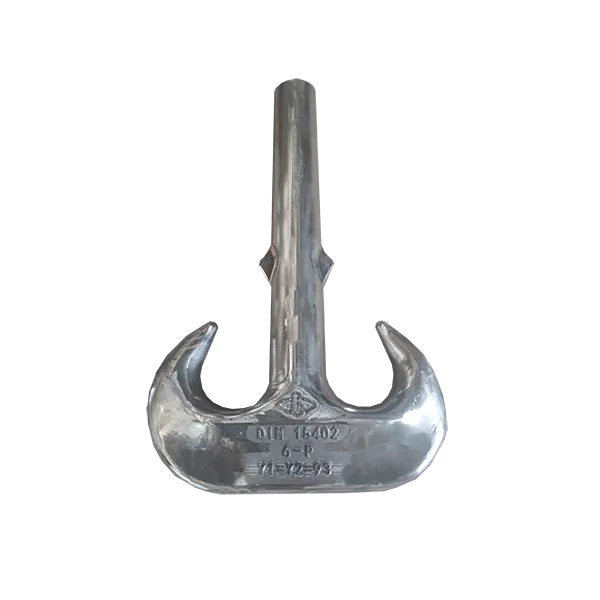
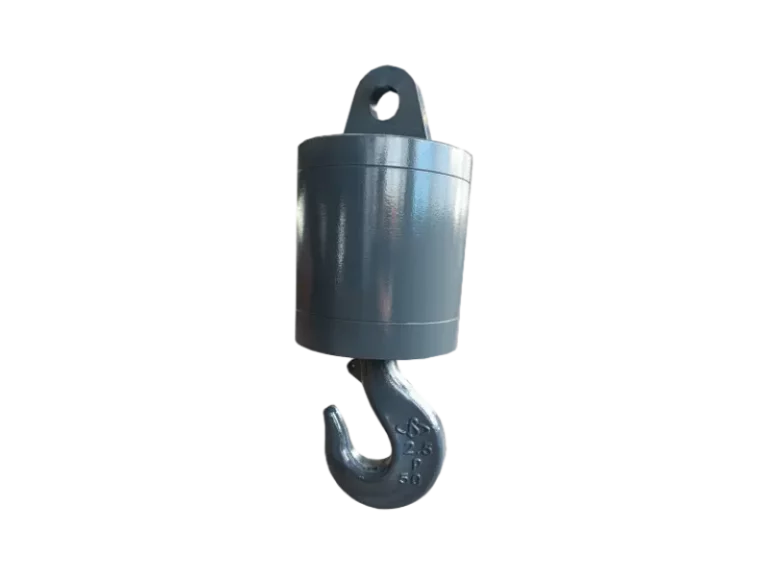
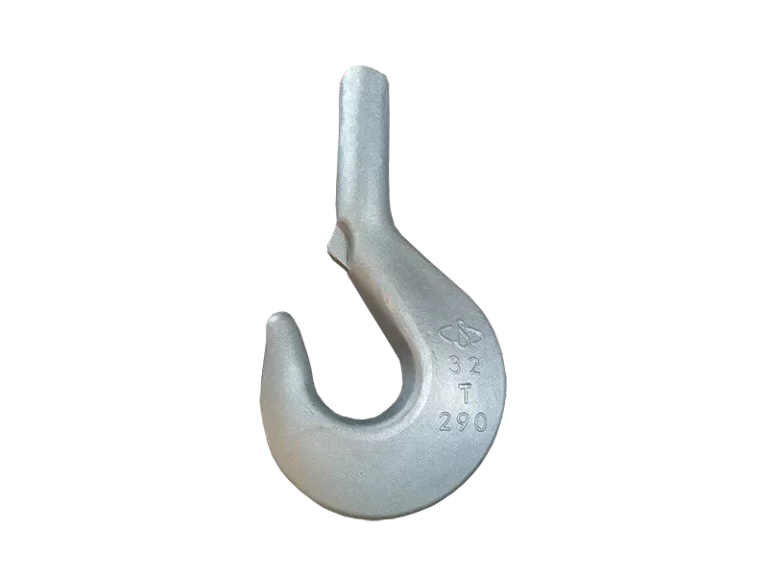
Core Premise: The currently valid and latest Chinese national standard GB/T 10051-2010 is a localized revised standard developed based on the outdated DIN 15400:1990 specification. GB and DIN hooks share fully interchangeable external dimensions, but differ substantially in strength grading, material requirements, design principles, inspection rules, scrap criteria and certification systems. In short, they are dimensionally compatible yet technically and commercially non-equivalent.
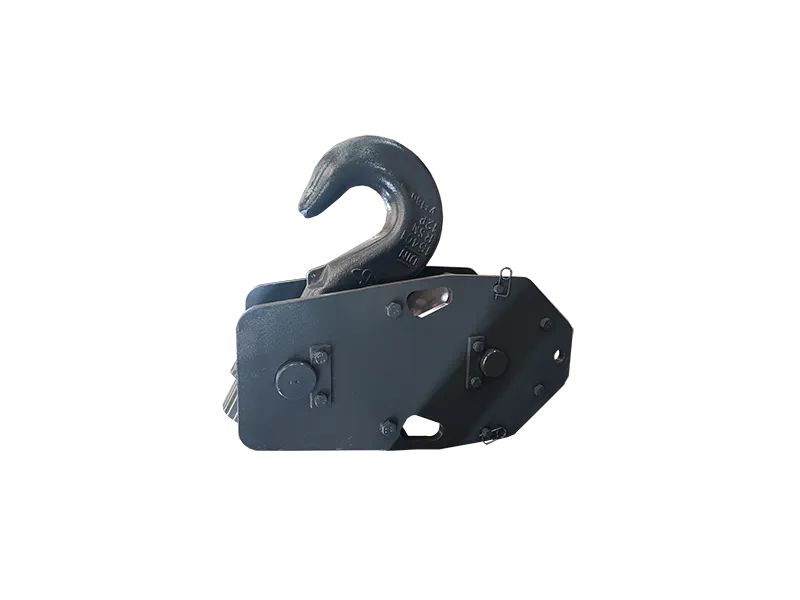
1. Standard Origin & Positioning Differences
DIN 15401/15402 (European & Global Universal Standard)
- A globally recognized German industrial standard, serving as the de facto universal dimensional standard for forged lifting hooks worldwide.
- Complete standardized system covering unmachined hook blanks (Part 1) and finished hooks (Part 2), fully compatible with the European crane design standard EN 13001.
- Widely approved for global export projects, including European, American, Middle Eastern and Southeast Asian foreign-invested industrial projects.
GB/T 10051 (Chinese National Standard)
- GB/T 10051-2010 is the latest valid Chinese standard, derived from the obsolete DIN 15400:1990 framework and not updated to align with the latest DIN and EN industrial revisions.
- Specially optimized and localized for domestic Chinese crane operating environments, inspection procedures and conventional steel material systems.
- Only mandatory for domestic Chinese projects; not accepted for overseas exports, where DIN/EN standards are universally prioritized.
2. Model Code & Naming System Differences (Most Intuitive Distinction)
Despite identical dimensional parameters, GB and DIN hook marking codes are completely incompatible, which often causes specification confusion in international trade and customer procurement.
- DIN blank marking codes: R, S, F, N
- GB blank marking codes: M, Y, D (die forging, free forging, lug type)
- GB standard adopts exclusive domestic marking rules and removes partial special working-condition clauses from DIN specifications, such as laminated hook application guidelines for high-temperature molten material lifting.
3. Material & Strength Grade Differences
DIN System
DIN standard defines a complete five-level strength classification: P / S / T / V / W. The V and W grades are professional ultra-heavy metallurgical grades, featuring strict control of low-temperature impact toughness and sulfur/phosphorus impurities. It fully complies with European limit-state design and fatigue resistance design requirements for heavy-duty lifting equipment.
GB/T 10051 System
GB/T 10051-2010 adopts a simplified domestic strength classification system, with no official definition for high-performance V/W heavy-duty grades. Its technical requirements for low-temperature impact resistance, impurity control and forging grain fineness are lower than the latest DIN/EN standards.
Core Conclusion: For lifting hooks of the same dimensions, DIN high-grade products deliver superior comprehensive performance, making them more suitable for heavy-load, high-cycle, metallurgical and high-risk overseas lifting applications.
4. Safety Factor & Design Logic Differences
DIN + EN 13001 (European System)
Based on the limit state design method, the European system adopts a basic breaking safety factor of 4× WLL. The safety coefficient is dynamically adjusted according to crane working classes (M1–M8), realizing accurate and rigorous performance verification for diverse heavy-duty working conditions.
GB/T 10051 (Chinese System)
GB/T 10051-2010 applies a traditional allowable stress design with fixed safety factors. It does not support dynamic adjustment based on crane working levels, resulting in relatively generalized and conservative design verification.
5. Testing, Certification & Acceptance Differences (Key for Foreign Trade)
DIN System
- Supports globally recognized EN 10204 3.1 / 3.2 material certification.
- All NDT inspections are implemented in accordance with EN 10228, with clear and unified MT/UT quality grading standards.
- Standardized phased inspection management for blanks, finished products, heat treatment and proof load tests, fully compatible with EU CE certification systems.
GB System
- No EN 10204 international certification system; only domestic Chinese quality inspection reports are available.
- Domestic NDT standards and qualification grades are not compatible with European and American industrial specifications.
- GB inspection documents arenot accepted by European, American, Middle Eastern and offshore engineering projects.
6. Discard Criteria Differences
- Section Wear Scrapping: Unified standard for both systems — hooks must be scrapped when cross-sectional wear exceeds 10% of the original size.
- Throat Opening Deformation: GB adopts relatively loose judgment criteria; DIN/EN sets stricter thresholds considering long-term fatigue service conditions.
- Crack & Thermal Damage: Both standards implement zero tolerance for visible cracks. DIN standard has stricter identification requirements for micro-cracks caused by fatigue or forging defects.
7. Application Scope & Selection Guidelines
GB/T 10051 Application Scenarios
- Ordinary industrial and mining projects equipped with Chinese national standard cranes
- Domestic projects that only require local inspection reports without international export certification
DIN 15401/15402 + EN 13001 Application Scenarios
- All export projects to Europe, Southeast Asia, the Middle East, Africa and other overseas regions
- Heavy-duty scenarios including metallurgical production, high-frequency cyclic operation and offshore engineering
- Projects requiring authoritative certification such as EN10204 3.1/3.2, CE and classification society approval
8. Core Summary (3 Key Differences)
- Same dimensions, different technical specifications: GB standard is revised from the old-version DIN specification. Hooks of the same size have consistent appearance but different material grades, classification rules and acceptance standards.
- Completely incompatible certification systems: GB has no supporting EN10204 international certification. All export-oriented hooks must adopt DIN/EN standard certification documents.
- Obvious performance gaps: DIN V/W high-grade hooks provide better heavy-load resistance, fatigue durability and low-temperature toughness than conventional GB standard hooks.
9. Comparative Table
| Comparison Item | GB/T 10051-2010 (Chinese National Standard) | DIN 15401/15402 (German Standard) |
|---|---|---|
| Standard Basis | Localized revision based on obsolete DIN 15400:1990 | Latest global universal system, fully compatible with EN crane specifications |
| Strength Grades | Simplified classification, no official V/W heavy-duty grades | Complete P/S/T/V/W five-level classification for full working conditions |
| Design Methodology | Fixed safety factor, generalized performance verification | Limit state design with dynamic adjustment by crane working class |
| Certification System | Only domestic inspection reports, no EN10204 certification | Globally recognized EN10204 3.1/3.2 certification |
| NDT Inspection Standard | Domestic exclusive standards, incompatible with EU/US specifications | Unified international EN10228 inspection grades |
| Applicable Market | Exclusive for domestic Chinese projects | Global export, foreign-invested and high-risk heavy-duty projects |
| Blank Marking Codes | M / Y / D | R / S / F / N |