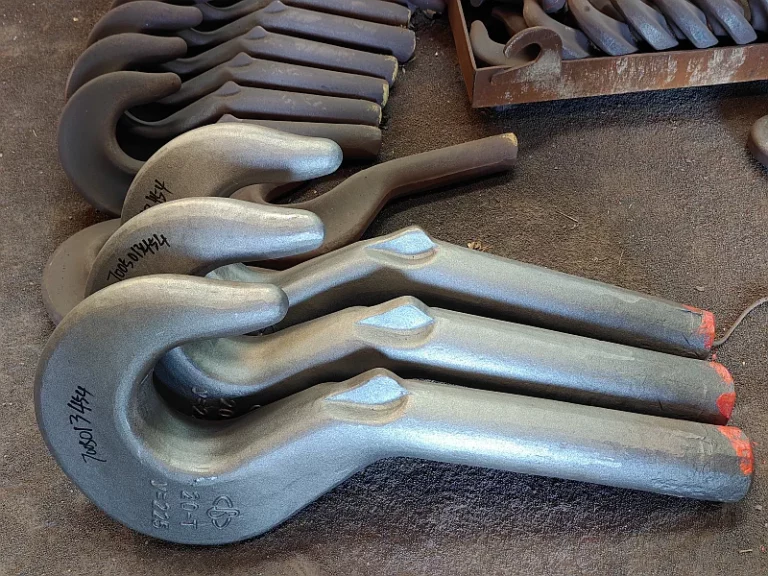
DIN is short for Deutsches Institut für Normung, the German Institute for Standardization. For lifting equipment, the DIN 154xx series is one of the most widely recognized and trusted standard families in the world. It defines how forged crane hooks must be designed, what materials may be used, how they are manufactured, tested and marked. If you buy or supply forged lifting hooks for cranes, understanding these standards helps you specify the right product, compare offers and ensure safety compliance.
The DIN Standard Family for Lifting Hooks
The DIN standards covering forged lifting hooks form a complete system. Each standard handles one part of the hook. The main ones are listed below.
| Standard | Title / Main Content | Applies To |
|---|---|---|
| DIN 15400 | Lifting hooks: materials, mechanical properties, lifting capacity and stresses. Master standard defining strength grades M, P, S, T, V. | All lifting hooks |
| DIN 15401 | Forged single hooks. Part 1: unmachined parts; Part 2: finished parts with threaded shank. | Single (point) hooks |
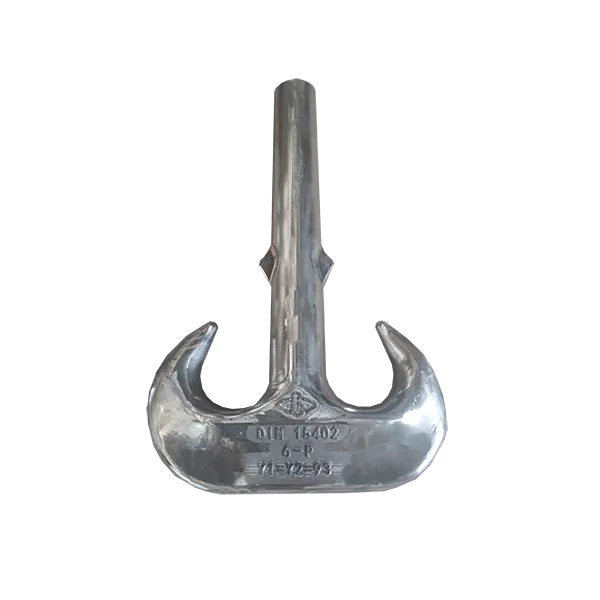
| DIN 15402 | Forged ramshorn (double) hooks. Part 1: unmachined parts; Part 2: finished parts with threaded shank. | Double hooks |
| DIN 15404 | Technical delivery conditions and inspection for forged lifting hooks. | Quality and acceptance |
| DIN 15407 | Laminated single hooks for hot-metal ladles and steel casting ladles. | Metallurgical cranes |
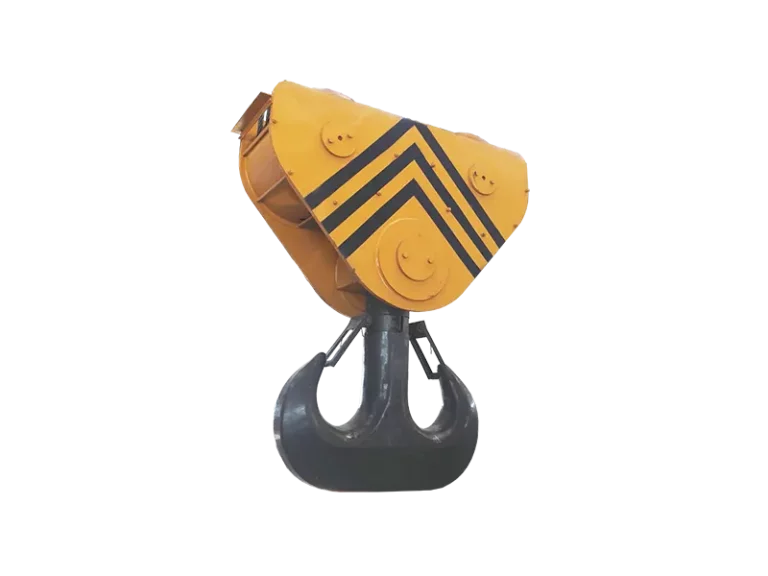
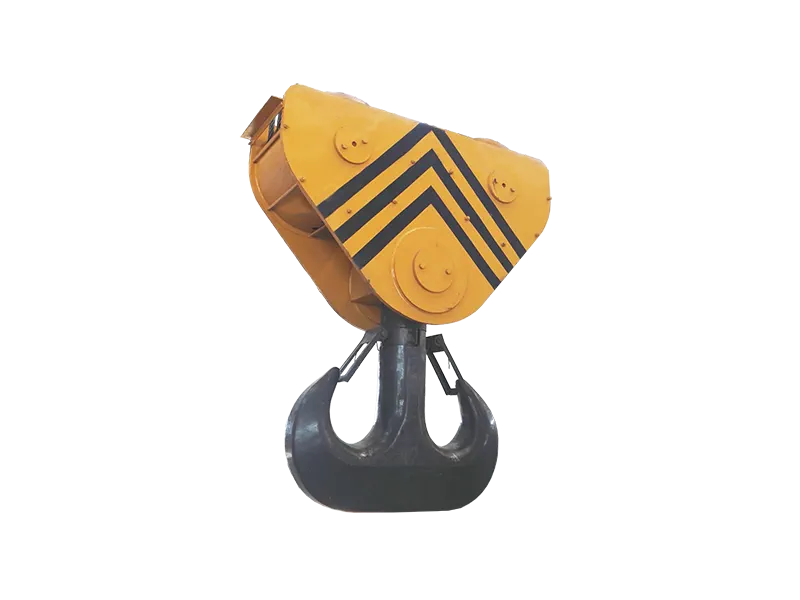
| DIN 15411 / 15412 / 15413 | Hook suspensions / crossheads / nuts used in hook blocks. | Hook block assembly |
DIN 15400: The Master Standard
DIN 15400 is the foundation of the whole system. It specifies materials, mechanical properties, lifting capacity and stress calculations for lifting hooks. A key part of this standard is the strength grade system. Forged hooks are classified into five grades from lowest to highest strength: M, P, S, T and V.
- Grade M and P: fine-grained structural steels (e.g. StE-355), used for normal and general lifting.
- Grade S: structural steel or low-alloy steel (e.g. 34CrMo4), for medium-duty applications.
- Grade T and V: quenched and tempered alloy steels (e.g. 34CrMo4, 34CrNiMo6), for heavy-duty and critical lifting.
The same hook size can carry a much higher load when made from a higher grade. That is why DIN 15400, not just the hook dimensions, determines the safe working load.
DIN 15401: Forged Single Hooks
DIN 15401 applies to forged single (point) hooks with a threaded shank. It is divided into two parts:
- Part 1 — Unmachined parts: the forged and heat-treated hook blanks. They have no thread and are not finally machined, leaving machining allowance for custom processing.
- Part 2 — Finished parts with threaded shank: fully machined hooks ready for assembly, with shank thread, precise bearing surfaces and final dimensions.
The standard specifies key dimensions such as hook opening, hook body thickness, base diameter and shank length, and defines hooks with or without nose, with hook numbers ranging from about 006 up to 250.
DIN 15402: Forged Ramshorn (Double) Hooks
DIN 15402 covers forged double hooks, also called ramshorn hooks, used for balanced two-sling lifting. Like single hooks, the standard is split into Part 1 for unmachined forged blanks and Part 2 for finished parts with threaded shank. Ramshorn hooks are typically selected for heavy-duty cranes where two slings share the load evenly.
DIN 15404: Delivery Conditions and Inspection
DIN 15404 sets the technical delivery conditions for forged lifting hooks. It requires hooks to be checked for cracks and deformation before delivery. During service, a hook must be taken out of use when the throat opening has increased by more than 10 percent of the original dimension, or when wear exceeds 5 percent. This standard supports the safe service life and scrap criteria used across the industry.
What the DIN Standards Require
Across the series, several core requirements stay consistent for forged lifting hooks:
- Forging only: hooks must be produced by closed-die or hammer forging. Cast or welded hooks are not acceptable because they cannot provide continuous grain flow.
- Heat treatment: hooks are normalized or quenched and tempered to achieve the strength and toughness required by their grade.
- Strength grade selection: material must be matched to the strength grade and the crane duty class.
- Testing and marking: finished hooks undergo inspection such as crack detection, dimensional check and proof load testing, and are permanently marked with size, strength grade and working load limit.
Beyond the DIN Series
For cranes sold into the European market, the proof of competence of forged hooks is additionally assessed according to EN 13001-3-5 (limit states and proof of competence of forged hooks), based on the relevant DIN product standard. Other internationally used references include GB/T 10051 (China), EN 1677 (components for slings) and ASME B30.10 (USA).
Tip for buyers: always specify both the hook number and the strength grade (M, P, S, T or V) when ordering a DIN hook. Two hooks with identical dimensions but different grades have different lifting capacities.
Conclusion
The DIN 154xx series gives a complete and reliable framework for forged lifting hooks: DIN 15400 defines materials, strength grades and capacities; DIN 15401 and DIN 15402 cover single and double hooks from blank to finished part; and DIN 15404 ensures quality through inspection and delivery conditions. Understanding these standards makes it easier to specify the right hook, compare suppliers and guarantee safe lifting.